
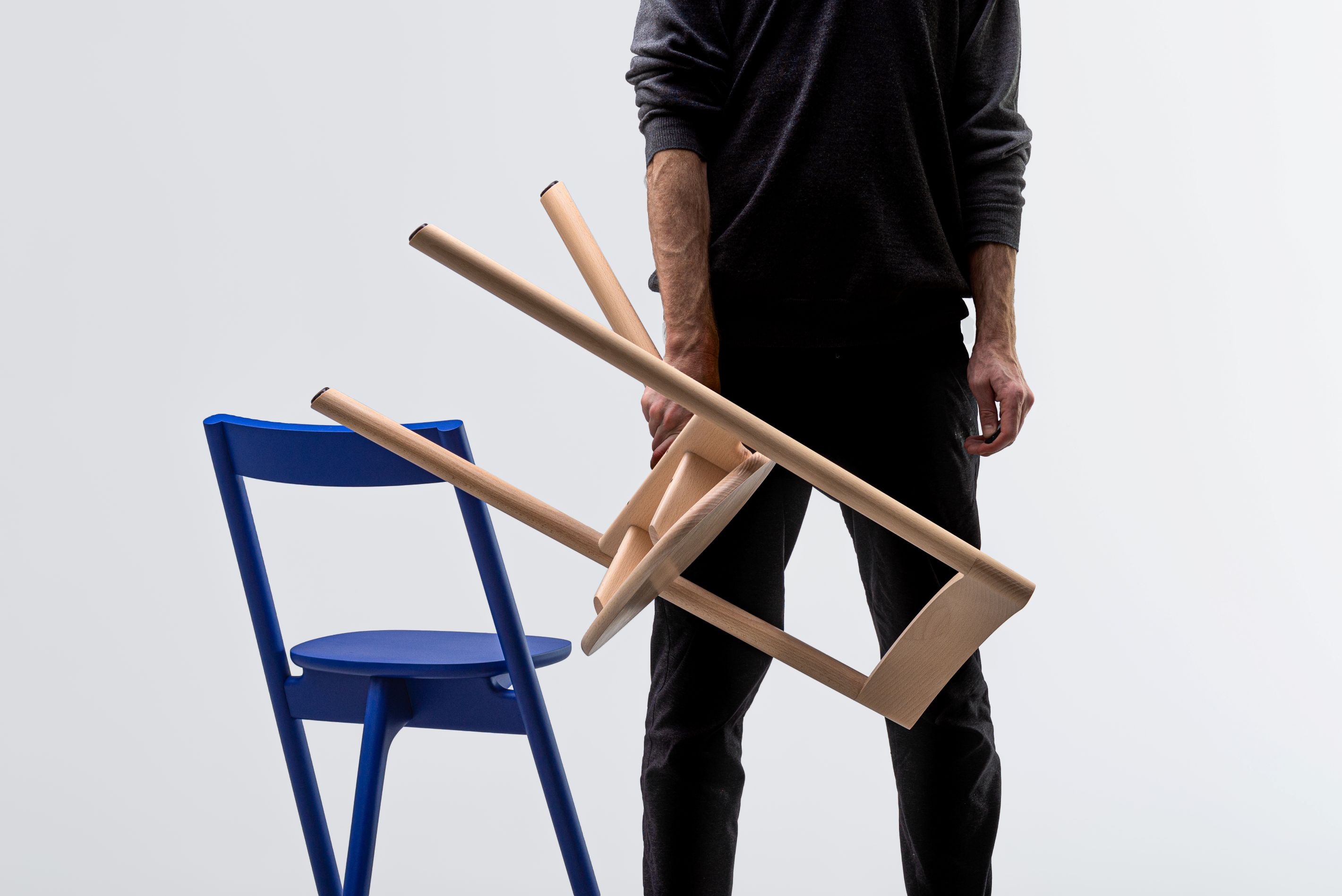
Taking home the title of Furniture Design of the Year, Ignacio Merino offers a fresh perspective on historical seating with the Mezza Chair. The piece reinterprets an 18th-century Alpine chair style, stripping it down to a surprisingly minimal form. Built entirely from legally harvested European beech, the chair matches strict structural stability with a light, purposeful form where no component is wasted.
Could you tell us a little about your journey into furniture design? How has your background in design, research and education influenced your work?
I grew up in a small apartment in Madrid, raised by a bookseller, my father, and a landscape architect, my mother. As you can imagine, it was a home filled with well-balanced books of all kinds, alongside a love for nature and urban-planning.
Despite the good taste that radiated from our home environment, the world of design only appeared in my life when I started university, where I discovered the existence of industrial design through technical engineering courses. It has been a great passion of mine ever since. Having the opportunity to complete a Master degree in design at ECAL, Switzerland, was a great boost, thanks to the excellent education and the workshops available to the students. From there, I was able to connect with the world of design research, which I pursued for four years at the University of Bolzano, where I currently continue to collaborate as an lecturer.
Personally, I have found the combination of educational backgrounds in technical engineering and product design, along with my personal work experience in the automotive design industry, to be very useful. It is a very powerful combination when it comes to bringing together different, highly valuable skills for a project. In other words, I believe that a designer, regardless of their background, must be able to draw on logical-technical thinking in combination with critical-humanistic thinking in order to challenge the assumptions we are given.
What inspired you to revisit an 18th-century Alpine chair and reinterpret it for contemporary living?
This project began with a close look to the book ‘As Found, Discovery of the Ordinary’ published in 2001, which presents a particular approach to design. It was the designer Klaus Hackl who introduced me to this publication. At its core, it’s about recognizing the value in what already exists, the familiar, the understood, what we might call ‘yesterday’s new’. The idea is straightforward yet powerful: if something has endured, it holds inherent worth. Our task, then, is to recognize these existing elements and thoughtfully engage with their features.
What makes the As Found approach rather radical is its sharp focus on the present – what exists here and now, and how it relates to real, ordinary things. Rather than chasing utopian ideals or being swept up by innovation for innovation’s sake, it grounds itself in the tangible and practical.
I recommend reading ‘As Found: The Discovery of the Ordinary’ edited by Claude Lichtenstein and Thomas Schregenberger and published in 2001.
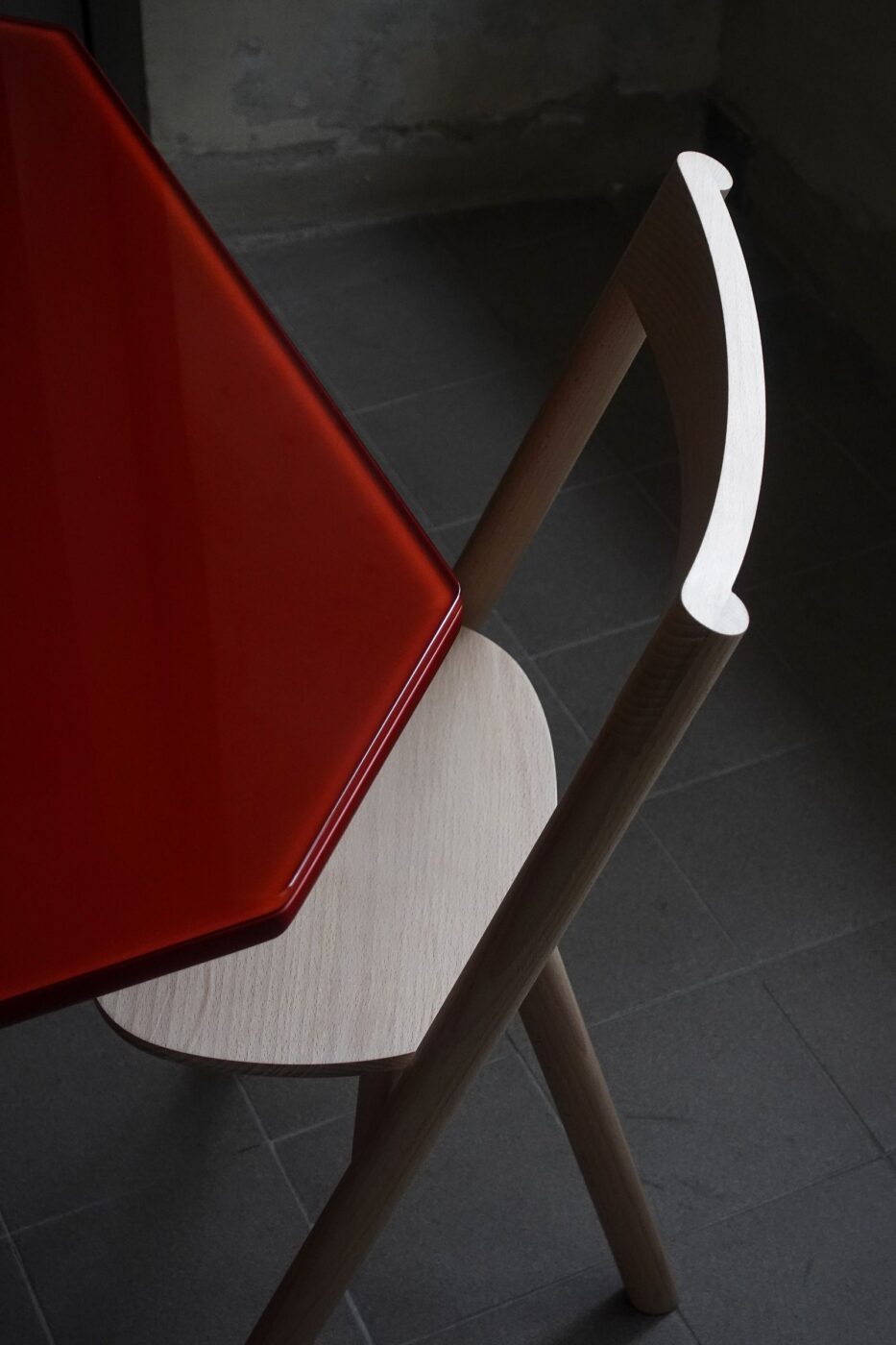
This chair design emerged from a conversation with an ‘as found’ piece from the 1700s, which I discovered during a visit to the Volkskunstmuseum in Innsbruck. This curious object sits somewhere between a chair and a crafted stool, with some rather distinctive features. It stands slightly taller than a typical chair, with an intriguing halfmoon seat that’s notably compact, just 26cm deep compared to today’s average standard 38cm.
Mezza Chair is remarkably compact while still offering comfort and stability. What were the biggest challenges in achieving that balance?
In my work as a designer, I have learned over time not to rush and to try to study the object from various perspectives, both digitally and with physical models. I gradually engage in a dialogue with the idea until it matures enough to be called a finished object, ready for use. In the case of the Mezza Chair, the part that took me the longest was working on the proportions and the geometric fitting of the structural part hidden under the seat, as well as the seat-to-backrest inclination angles that ensure the necessary comfort for a compact chair like this one.
The chair’s three-legged structure and interlocking wooden construction are both distinctive features. Could you tell us more about how these design solutions came together?
The choice to work with wood, a warm and approachable material, was dictated by the nature of the object and where I believe it can best coexist, particularly in small domestic or hotel spaces. This typological factor, combined with the nature of the 18th-century chair I am paying homage to, led me to work with a construction strategy based on interlocking joints, balancing stability and visual solidity. Gradually, through different phases of back-and-forth between design, prototyping, and testing, the object began to take shape. Once I understood the potential of the three-legged construction and the possibility of connecting the front legs to the backrest, giving the object its dynamic character, it happened almost automatically.
Sustainability is an important aspect of your work. How did material selection and craftsmanship influence the final design of Mezza Chair?
In this project, I took charge of the design, prototyping, and construction of the object myself. As I mentioned earlier, the selection of the material responds to an environmental material need, where the object presents itself to the public and invites use. I believe solid wood is the right material for this. On the other hand, the final silhouette of the object speaks to the combination of the structural needs of the piece and my own construction and prototyping capabilities. It is a dialogue between function and my craftsmanship limits, and I think it is well balanced.

Ignacio Merino @Karla Voleau
Congratulations on winning Furniture Design of the Year! What does this recognition mean to you, and how does it feel to see Mezza Chair receive this award?
I believe that given the difficulties present today in the world of product design, where competition is (very) high and the possibility of producing an object with a company is complex, winning the award serves as an encouragement to continue working on new projects and seeking relevant solutions for the objects that surround our daily lives.
Your work often combines design with engineering and research. How do you see these different disciplines shaping the future of furniture design?
For me, the convergence of design, engineering, and research is fundamental to stepping away from “blind-solutionism” and technological innovation simply for the sake of innovating. As I have proven by combining academic research with industrial experience, logic must always work hand in hand with critical thinking so as not to lose sight of the object’s true purpose. I see the future of furniture design not in creating shapes dictated by trends or hyper-consumerism, but in technical refinement and analytical rigor. These combined disciplines allow us to build honest objects, capable of existing in the background and centered on the coherence between the real needs of the user, the material, and the environment.
Looking ahead, what kinds of projects or ideas are you most excited to explore next?
Looking ahead, I am motivated to continue exploring the “As Found” approach and the technique of reaction: paying close attention to the ordinary and to what already exists in order to transform the familiar into relevant solutions for our daily lives. Additionally, I am enthusiastic about the idea of collaborating with local industries and companies where I can innovate through observation and pragmatic analysis. I want to continue developing projects that explore honest materials, balancing rigorous structural functionality with the warmth of a living space. And, of course, I am interested in keeping that research component open, allowing design to function not only as a resolution of practical problems, but also as a space for dialogue and critique regarding our behavior toward objects.
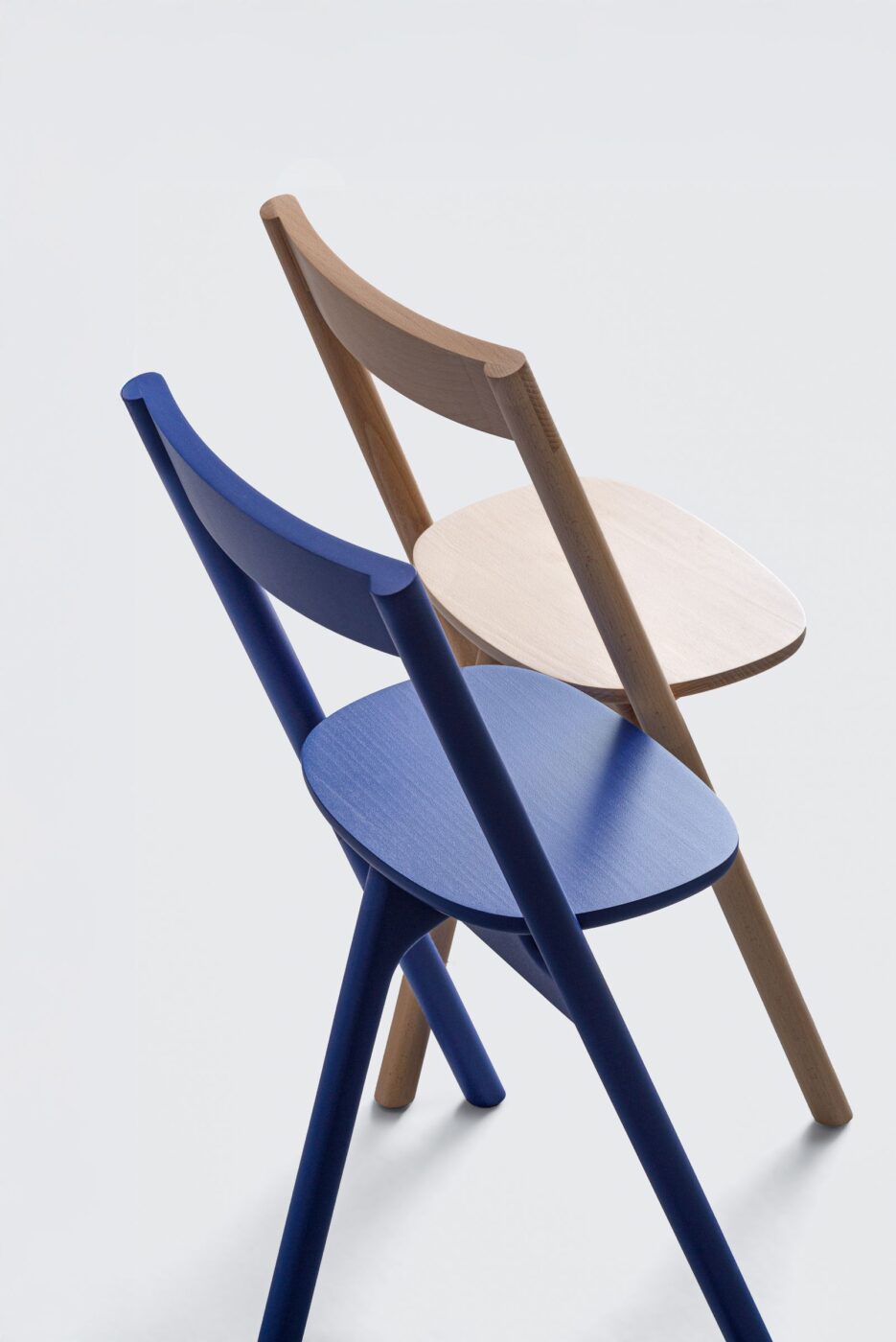
Mezza Chair: Three-legged dining chair by Ignacio Merino