
We talked to the SIT Furniture Design Award ™️ jury member Meghan Preiss, the youngest board member of the World Design Organization (WDO) in their 60-year history. Meghan is also a Manager of Customer Experience Design Integration at Delta Air Lines.
How did you realize that you wanted to work in the design field?
Growing up I was always creative, I danced competitively for 17 years and really loved photography. I originally went to school for photography, but when I learned there was a field that allowed me to be creative and build objects and experiences that can improve people’s lives I was hooked.
You graduated from the prestigious “Savannah College of Art and Design”, which course was your favorite one and why?
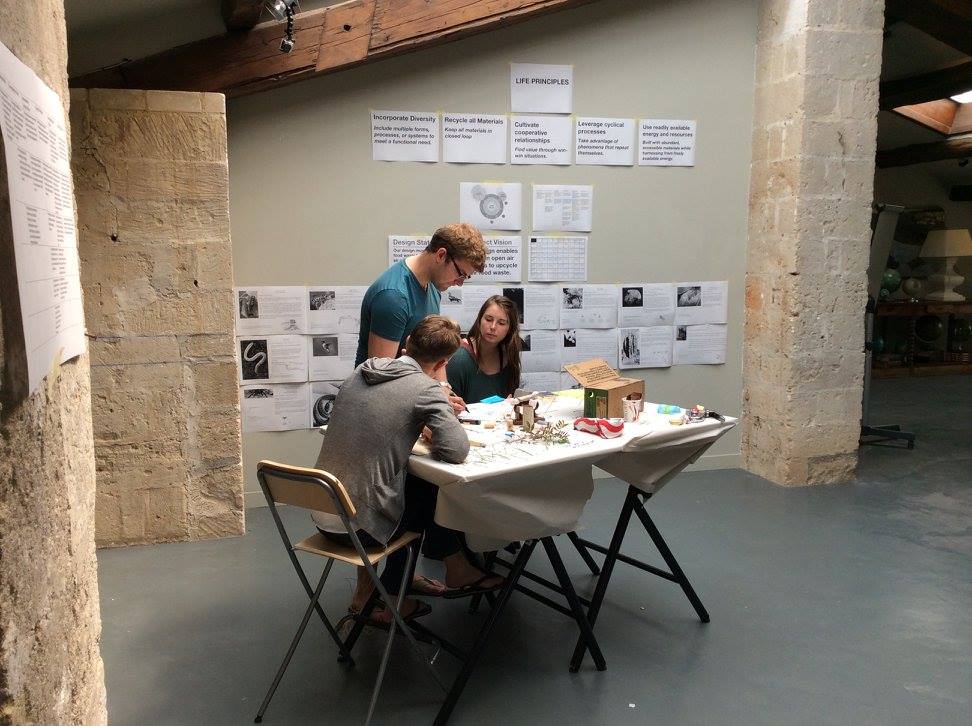
My favorite course was Biomimicry, taught by Professor Regina Roland during my study abroad in Lacoste, France. I love being in nature and learning how to observe and question nature in a new way that completely changed and expanded my mindset. This is where I learn how to solve complex problems by observing and being curious about how similar problems are solved every day. It enabled me to see that not everything is exactly how it seems.
You have previously worked as a Lead Business and Service Designer at IBM iX, can you share more about it?
Yes, I worked in the consulting side of IBM. This enabled me to stretch into any industry. It’s a vague answer, my day-to-day expanded from supporting clients with leading design teams to design thinking training, developing new business opportunities or understanding how to streamline to create more value to creating experiences.
And can you tell us more about your current role as a Manager of Customer Experience Design Integration at Delta Air Lines?
Yes, working at Delta Air Lines is incredible. I work on what I call the chief of staff team and my role is to upskill the entire customer experience design organization in design processes and approaches. This includes bringing design into our strategy and goals discussions as well as transitioning all of our initiatives to a human centered and holistic approach. A challenge for sure, but it motivates me everyday when I start to see little changes like a project using a how might we statement, or someone asking in a meeting how does this impact the human behind the customer.
When did you start being involved with the World Design Organization?
I started being involved with the World Design Organization in 2017 when the Industrial Designers Society of America invited me to attend WDO’s General Assembly in Turin Italy. It was there I realized the impact design can have in society and politics, and let’s just say I was hooked!

Before joining the WDO’s Board Member (btw- congratulations!), you were the United States female representative in WDO’s Young Designers Circle. Can you share more about your role and the diverse initiatives you have supported?
Ah, Thank you! Before becoming a board member, I was elected to be one of the US representatives for the inaugural Young Designer’s Circle. This is a group of 20 selected designers under the age of 40 who work on special initiatives with WDO’s members that bring the design to the United Nations Sustainable Development Goals. My group was very passionate about education, equality, and defining a legacy for young designers within WDO. We worked on projects with Soundwaters, teaching k-12 students creative problem solving to upcycle the plastic bottle caps their school had collected, along with initiatives within Open Afrika, Tunisia Design Week and more. And now as a board member, I get to lead this program and create opportunities for the next generation of design leaders.
What do you think are the biggest challenges and opportunities in your career now?
Great question, the biggest challenge is that I am so curious about everything so I tend to expand my horizons and options, and often, companies and teams want someone who can focus and be an expert. Being a young leader who has an extensive skillset and expertise is not as popular as it sounds. But, I also believe that this is my biggest opportunity because I am curious and dabble in so many things, it has led me to some really incredible projects and initiatives including working on an innovation lab with Ford to designing LEGO’s new paper pre-pack bag and more.
What are you working on at the moment? Do you have any upcoming projects or collaborations that you’re able to tell us about?
At the moment, I am working on my current dream project. A global conversation series where I have the opportunity to empower voices as young as 6 years old to share their dreams of the world. It is a program I am starting with the World Design Organization titled Not There Yet. The title is a play on the typical conversation where a kid is in the back seat asking their guardians if they are there yet, and are constantly being told no. This conversation series is providing the space for the next generation to tell the “adults” no, we are not there yet when it comes to solving global sustainability problems. I find that Gen Z and Gen Alpha are incredibly passionate about the state of the world. I want to empower the next Greta Thunberg or Malala of design to feel their voice is being heard.

Last, do you have any passions aside from design?
Yes, I really love camping, hiking, and pretty much anything that gets me outside and although I didn’t pursue photography in university, I still love to play with film and digital photography when I can. Also, I would say I’m most passionate about giving back. I had and have really amazing mentors who opened doors and my mind to so many things and I want to continue to give back to the next generation through mentoring and speaking at universities.
We talked to the SIT Furniture Design Award ™️ jury member Lilian González-González , Industrial Design Academic Coordinator at Anahuac University of México Board and Member of the World Design Organization.
You are currently the Industrial Design Academic Coordinator at Anahuac University and have been a professor at several Universities and cities around Mexico. What do you find the most fulfilling about working in universities?
Definitely the research and experimentation-creation. In universities, we have the capability to have time to think, reflect, research, and time to make more attempts. This is a “big power because” students and academics can experiment and develop innovation if they have the correct stakeholders and alliances.
When did you join the World Design Organization?
Anahuac University has been a member for 20 years, and I started being in charge of the membership and following the WDO events five years ago. It has been a very enriching experience on an academic and personal level.
Congratulations on your new position as a board member. Can you share with us more about your role and responsibilities?
We are in charge of the strategies. We reflect on the current condition of design and its power to improve current situations around the world. Mostly, how can we, as a design community, advocate and promote design for the good of all and to improve the quality of life.
What do you think are the biggest challenges and opportunities in your industry now?
I grew up in an industrial city in Mexico that used to be a craftsman town for shoe manufacturing. I learned about the industry since I was a child, in my father’s factory, and I had the opportunity to see the industry’s transformation. I lived through the devaluations of the Mexican peso, the Free Trade Agreement, and how this directly affected the industry and the quality of life of the people PLUS its environmental impact. Then I understood that nothing in this country was forever, neither the resources, nor the companies, nor the things, nor the people, etc. We live in an unstable world and we must learn to deal with it.
Our culture is used to be reinvented very often and all around us. In my country, and as with other developed countries or marginalized areas, we used to live in a “sustainable way” (why I am saying this? Because it is the popular word around this issue). We, as Mexicans, used to reuse everything, to maximize resources, to have less waste and fewer expenses, but since the ruthless capitalism and globalization, we started to learn the bad practices to be stronger, to support the industry’s cannibalism. But, I have the idea that industry can unlearn and return to the good practices like how the natives made historically or how they still keep their good practices even in this aggressive world.
Now it seems that again we have to learn from the developed countries as colonizers with their methodologies, like cradle to cradle, circular economy, etc., which have very nice intentions for a change in most cases, but most of the knowledge we already had, but we just wasted and underestimated it. It is not a romantic point of view to go back to the past; it is just to remember that we are wasting time searching and searching for new methodologies, certifications, and bureaucracy that could legitimate what we are saying or thinking to make a correct way. We don’t have so much time. We just have to look around.
Finally, I believe that design has to learn from the minorities, from underdeveloped countries, and from marginalized people, to learn about resilience and how to survive every day with almost any resource. A strategy must be developed together with developed and underdeveloped countries, with large and small industries, which means diversity, a hot topic as well.
What are you working on at the moment? Do you have any upcoming projects or collaborations that can tell us about?
I am working on new research lines, and I would like this to be part of my postdoc. Currently, I am studying for a one-year certification in disability at a critical studies institute www.17edu.org. So the lines of research that I am applying in the academy with the design students are related to healthcare, peace, disability, illness, migration, waste…
On the furniture topic, I am immersed in this business related to recliners and design engineering. Currently, in the company, we are working on a project of furniture for hemodialysis, and here I can show the project for public hospitals that have many furniture needs, which have increased in the pandemic.
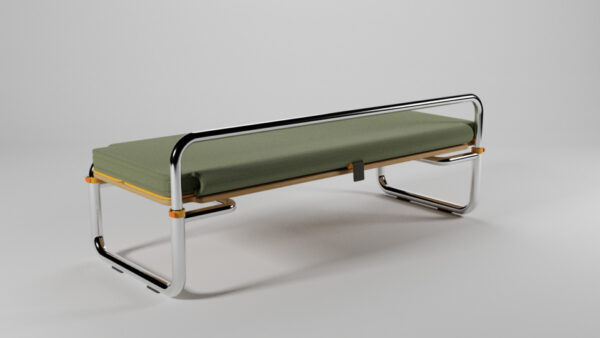
“Hospital bench and bed”
Directed by: Nub-design
Collaboration: Design faculty, Universidad Anahuac Mexico.
Design by: Carla Cogordan, Diego Castillo, Alejandro De La Cruz, Sergio Vivia.
Teacher: Carsten Lemme
Which advice do you give to your students, starting their career in Design?
Observe and learn about minorities, about disability, about little things, about details, and learn about it, keep it in main and apply it in your life and creativity.
The annual catalog features the winners of the SIT Design Awards 2021 in Interior Design and Furniture Design.
Read the exclusive interviews of Brazilian Designer and Furniture Design of the Year 2021 Jader Almeida; Nidhi Nimodia, student of the MIT Institute of Design in Pune, India and Emerging Interior Designer of the Year, Narges Shah Ahmad Ghasemi.
The catalog is available to purchase on Amazon and can be downloaded on the SIT Furniture Design Award website.
The 2022 SIT Furniture Design Award is now accepting entries into its two major categories, Furniture Design and Interior Design. It welcomes submissions from professional, emerging designers and students until the 28th of February 2023, the program promises to attract entries from some of the most forward creative furniture firms, manufacturers, distributors and independent designers from all around the world!
The SIT Furniture Design Award ™ was created as a way to celebrate and share the remarkable work of furniture designers and those who use furniture in their projects. Creativity, innovative vision, and accessibility in the furniture design community deserve to be applauded and shared widely, across the world.
Looking at challenges and seeking ways to overcome them are central to furniture design. For this reason, the SIT Furniture Design Award has created an Innovation Center, the winner of which will receive a cash prize of CHF 3’000 to create a prototype or to start production. Each year, a different topic will be chosen, focusing on projects which highlight invention, closely examine today’s challenges, and find ways to overcome them.
In 2021, the awards received over 350 submissions from 47 countries, the range of work was as astounding as always, with honorees Jader Almeida, receiving the “Furniture Design of the year” grand title for “May’, Studio GAIA with the design of “W Washington D.C. Hotel”, RotoBed® designed by Hans Sandgren Jakobsen; based in England Knightsbridge Furniture Productions was awarded for the “Tron Furniture Range”, the program also recognized Messana O’Rorke with the “Junegrass House”and
Karim Rashid for the “Keen Sun Chaise”. … just to name a few.
The 2022 jury, composed of 21 experienced designers and decorators’ experts, academics and media representatives will select the winners in each category in February 2023. Jurors include Juan Mellen, president of the Design Institute of Spain, Radhika Seth, Vice President of Sales for the well-known media Yanko Design, Stella Hernandez, Assistant Professor, Environmental Design Department at the ArtCenter College of Design in California and Fabio Colturri, Professor at the Istituto Marangoni Milano Design.
The “Furniture Design of the year” and “Interior Design of the Year” professionals and students will receive the coveted SIT Design Award Trophy; their winning projects will be showcased to the global audience and be featured in the Annual SIT Award catalog. Winning the SIT Design Awards is an opportunity to step into the global spotlight, elevate the company profile or boost a starting career.
Registration for the SIT Design Award is now open and will close on February 28th, 2023. Those who register before August 15th; will receive an early bird discount of 15%.
A graduate in architecture, with award-winning pieces in major national and international design competitions, Jader Almeida has gained increasing prominence and continues to improve his work with his participation in exhibitions, technical visits, and courses in several countries. Winner of the “Furniture Design of the Year”, we sat down with Jader Almeida to hear more about his passion for design and creative process when working on “MAY”.
Could you tell us a little about your professional journey?
Since I was 15 years old, I have been ‘in’ the industrial “process.“ As is necessary, it started with some technical courses – electricity, operation of mechanical machines, etc. – all of which shaped my perception of how things are done and how everything works within the production chain.
Obviously, over time I understood and became involved with the “world” of research, projects, and prototypes, and at the time of choosing an undergraduate degree, I opted for architecture, since an architect can work on projects of different scales, and all of this fascinated me.
I think time means experience and maturity, and these ingredients were and are determinants for my choices: a thoughtful balance between past things, this moment, and future prospects.
How did you discover your passion for design and furniture design in particular?
Design has always been my perspective; more precisely, since I was a child, I have always had an interest in areas associated with creation or forms of expression through drawings, schemes, and correlates.
Naturally, things converged into this. As mentioned in the previous answer, my journey has always been somehow linked to areas that can be described as associated with design (as a discipline), industrialization, and production processes, so it all made sense.
For me, architecture, design, and art are like pillars of world perception; the design is the solution to everyday “problems,” whether concrete or abstract, and all of this fascinates me.
 What was your creative and design process when working on “MAY”?
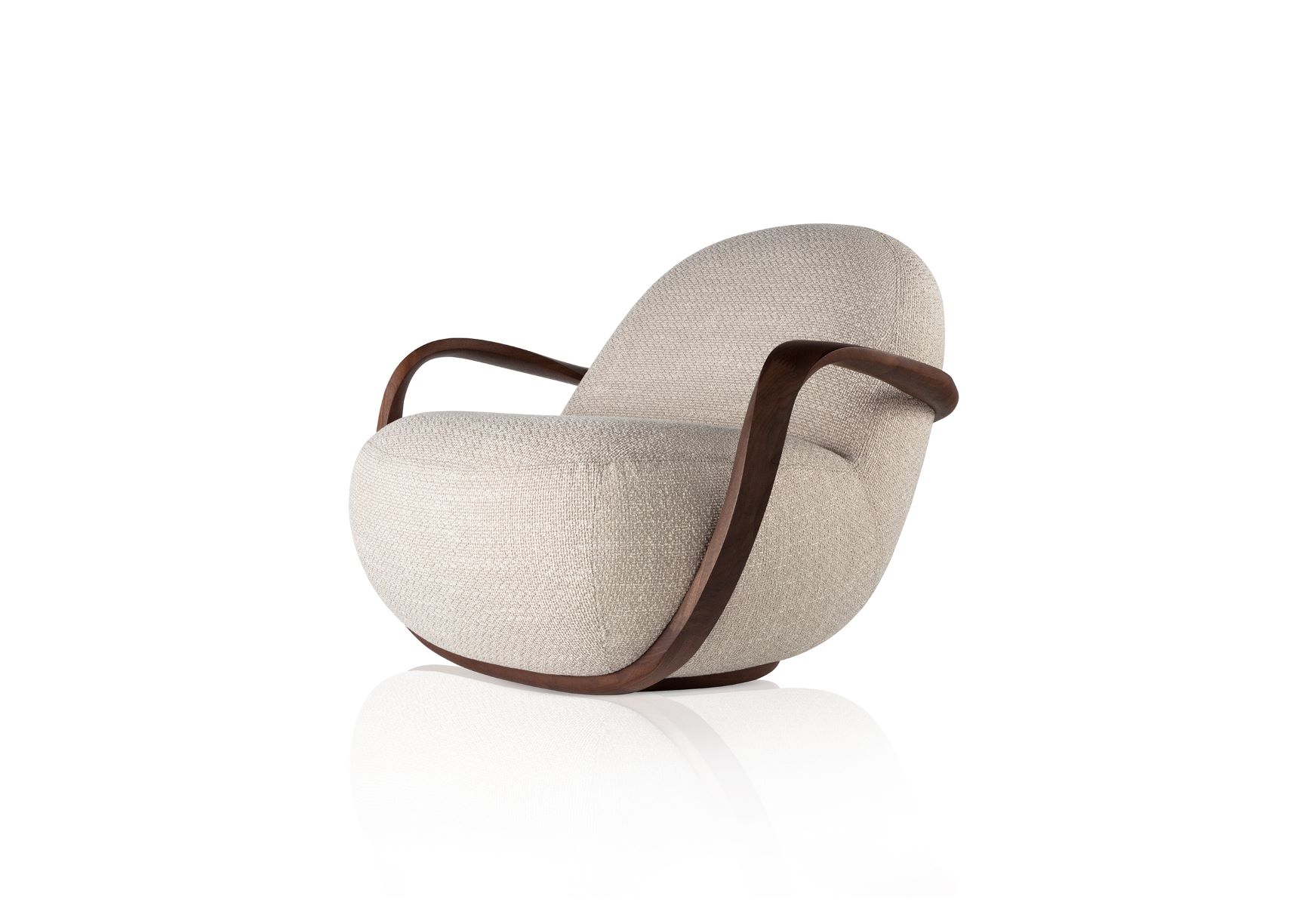
MAY can be seen as an antithesis of its own description; that is, observing the structure that composes the arms and the base, you can see pronounced minimalism. The thickness, twist, and segment are precise, rational, and delicate. The body, seat, and backrest are all a good size, have beads, and feel soft and inviting.
Therefore, with these descriptions, we can have a retrospective of the style adopted for this piece. The search for a balance between materials, use, and proportions is inspired by biomorphic aspects. From there, an expressive exercise in drawings and mockups to get the perfect curve, fit, stability, and proportion.
What’s in the pipeline for you?
My work is very prolix, something almost circumstantial to the environment I am in (Brazil). My activities range from industrial advice to product design, architecture, and retail. Something quite complex to describe in a nutshell. However, it is all possible thanks to a cohesive team committed to excellence at all levels. And all that puts a lot of things in the pipeline, from a new collection of objects, and architectural projects in new stores and homes to retail-focused technology projects.
What is your secret to creativity?
Yes, it comes from all these everyday impacts, as something that feeds back into the same system.
You have received hundreds of awards, distinctions, and recognitions in the last 15 years… What can we wish for the future?
I hope that curiosity and the will to always improve will continue to be my guides.
Lastly, what would be your best advice for young designers?
I have always found it very difficult to give advice, since things are not the same in different realities, especially today, with the fast changes. But at the right moment, I say that rendering does not mean product. A successful design must be aligned with the entire chain, from resources to daily use.
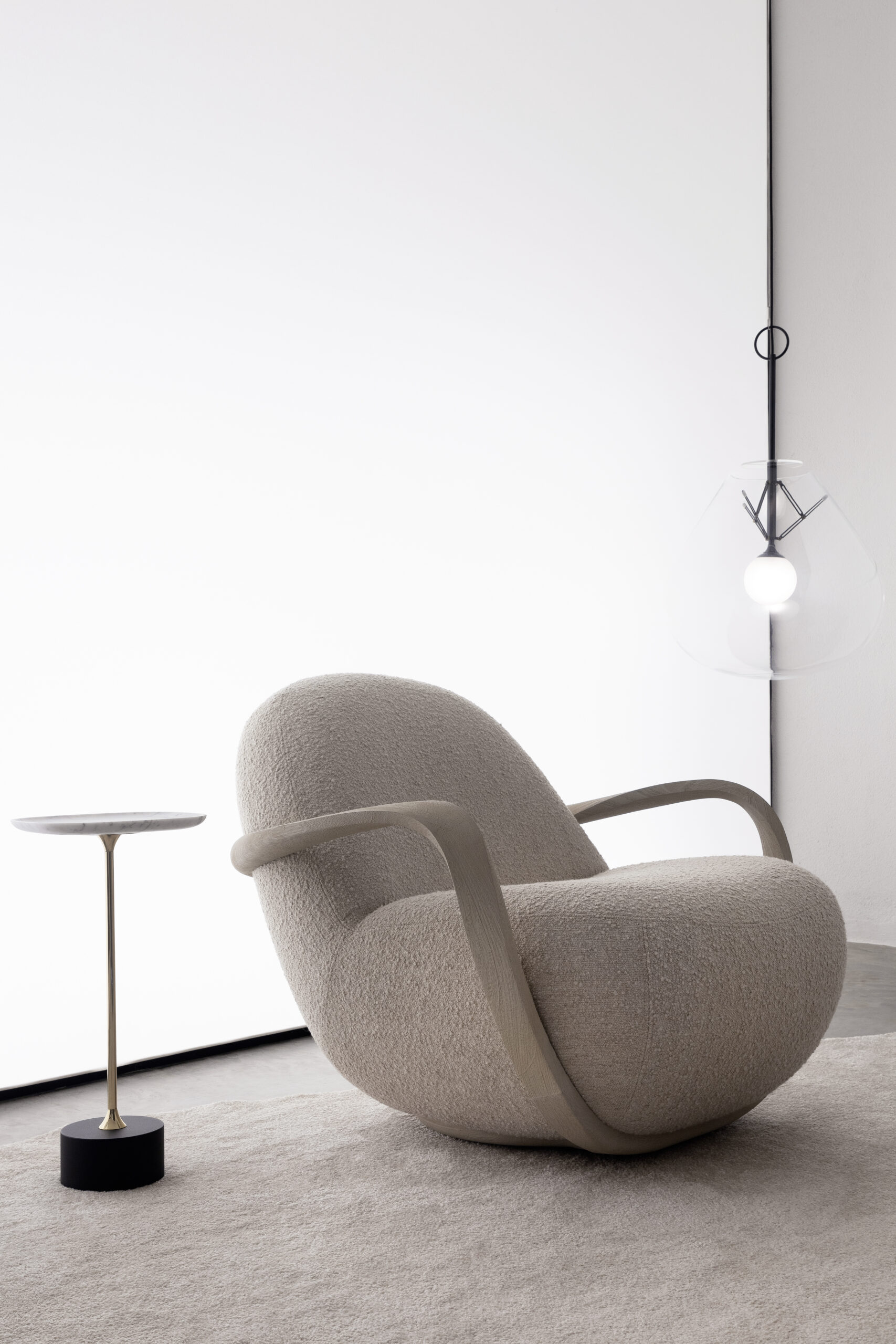
Photo credit: SOLLOS.
The love for furniture design was a starting point in the beautiful world of design for Nidhi Nimodia. Student of the MIT Institute of Design in Pune, India; Nidhi is sharing with us the original idea and inspirations for FIKA, the winning “Furniture of the Year”.
Could you tell us a little about yourself? Where are you from?
I was born in 2000 in Nagpur, India. I see design as an extension of myself. I largely believe in designing without boundaries, bias, or preconceived notions.
How did you discover your passion for furniture design and decide to study at the MIT Institute of Design in Pune, India?
As an art student in high school, I always loved getting messy with different materials and would spend endless hours exploring newer mediums and understanding them. I was never scared to experiment with materials and processes. Later, I was evoked by the constant interaction we humans have with furniture subconsciously. Some happy, some sad! The love for furniture design was indeed a starting point in the beautiful world of design. The MIT Institute of Design in Pune, India, offered a unique course on learning space and furniture design, making it the apt choice.
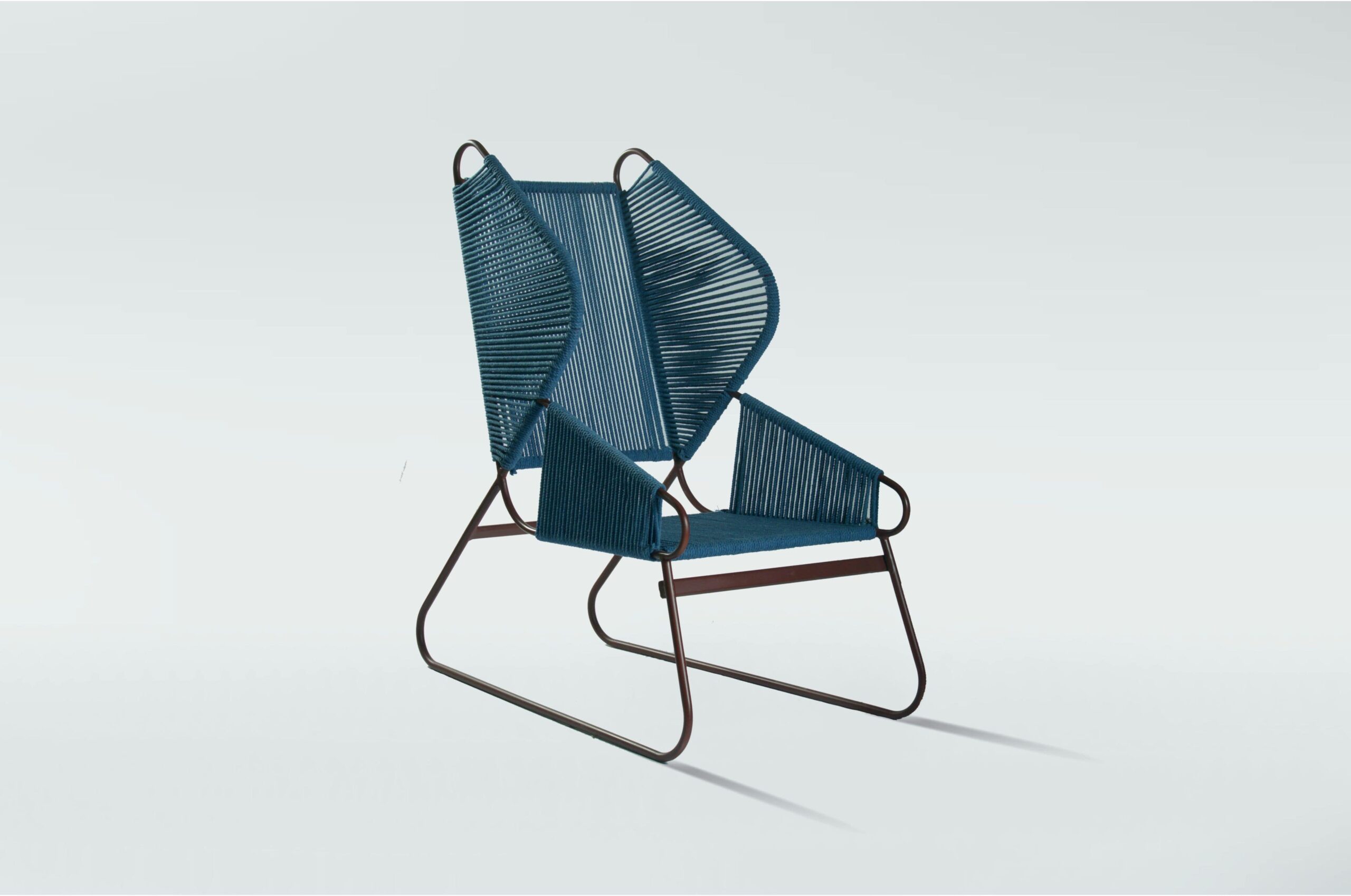
Can you please share your creative journey behind “FIKA”? Where does your inspiration come from?
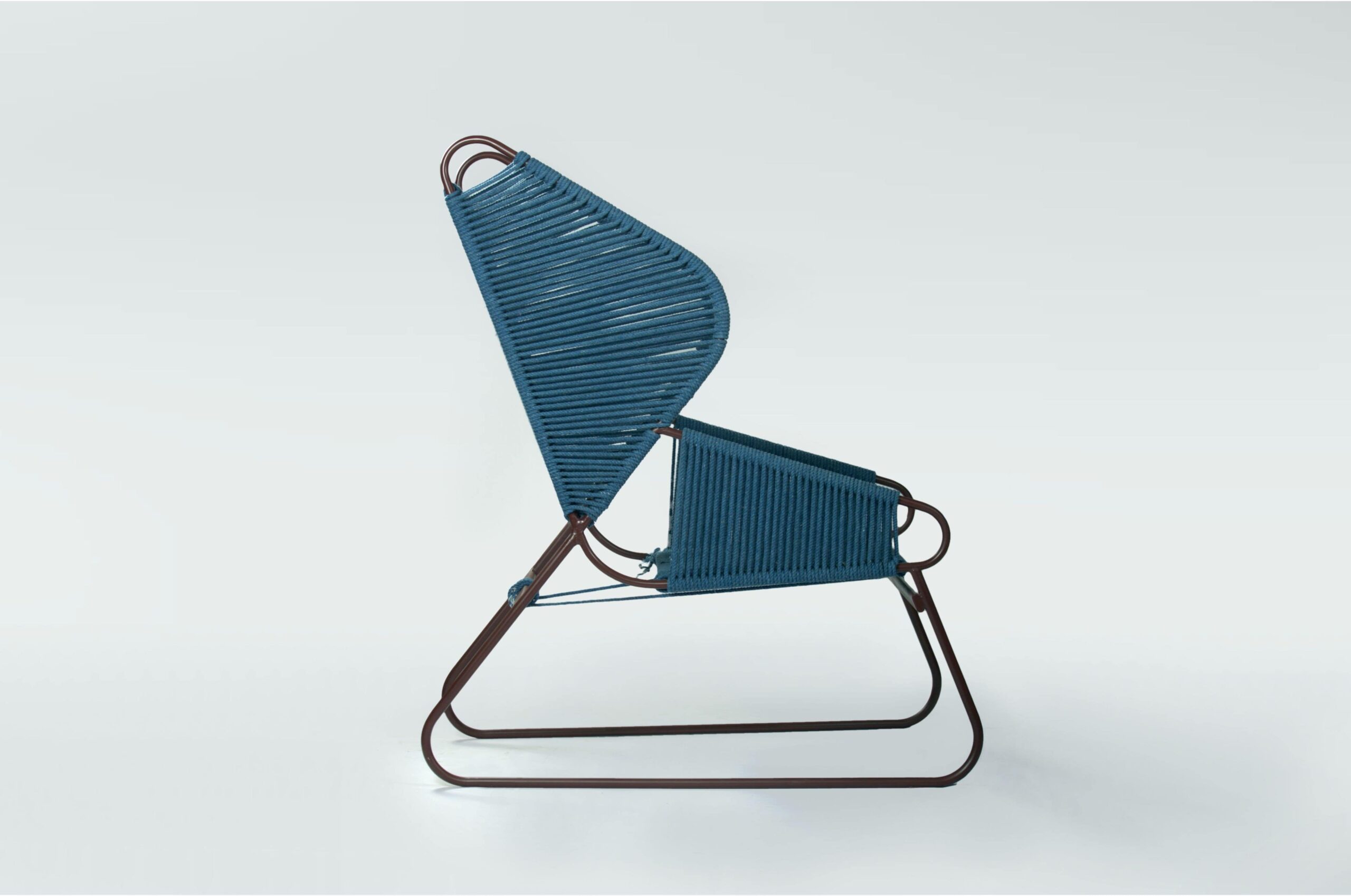
Fika [Swedish: Slow down and appreciate the good in life] is an outdoor chair. It has evolved from my personal journey during the pandemic. Locked inside our homes, we all craved privacy and space for ourselves. The idea originated from carving a space for oneself using furniture rather than space itself. Materiality was a very important factor in executing this idea. Dyed cotton threads and bent metal pipe form a winged form that feels light and airy. Weaving the seating ensures the user connects with nature through pockets of air and light. The colors aim to blend with the soil and nature.

Can you please share with us, what becoming the winner of the “Emerging Furniture Designer of the Year” means to you?
Winning this prestigious award has been very gratifying for me. The confidence from this recognition has only propelled me to strive for higher and greater boundaries. I am glad that the vacuum of my work has gained a platform where it can reach out to a wider community.
What can we wish for in the future?
I have been very fascinated with working across various scales and mediums. I see myself designing everything that makes me interested or makes me curious. Every day is an opportunity to find myself and my niche a little more. The goal is to keep learning, exploring, and executing, and most importantly, to enjoy the journey.
A student at Iran’s Pars University of Art and Architecture in Tehran, Narges is a passionate artist and designer. Becoming the SIT Design Award “Emerging Interior Designer of the Year” gave her the motivation and strength to work harder and be more courageous in implementing her ideas.
Could you tell us a little about yourself? Where are you from?
I was born in 1995 in Tehran, Iran. I am a graduate student in the field of interior architecture, and I am interested in deconstructive designs. Color is the main element in my designs. I am interested in painting, fashion, and furniture design. And I also paint in my spare time.
How did you discover your passion for design and interior design in particular?
My bachelor’s degree was in information technology, and my interest in interior architecture was discovered through a computer graphics course. While reading that course, I realized that creating new environments gave me a different and deeper feeling that led me to enter this field.
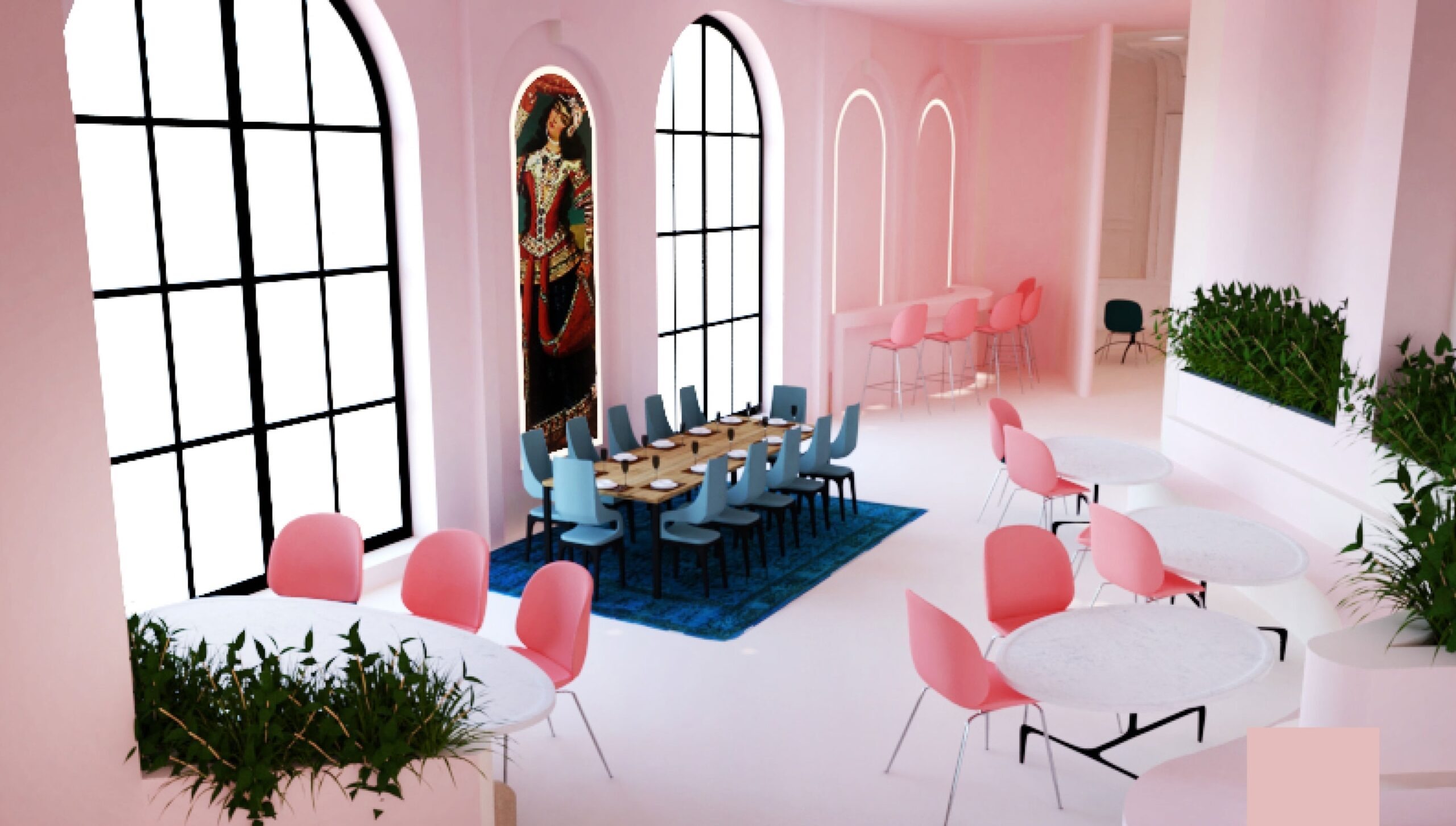
What was your design process when working on the “Café Pars”? Which elements of your design are inspired by the local culture and history?
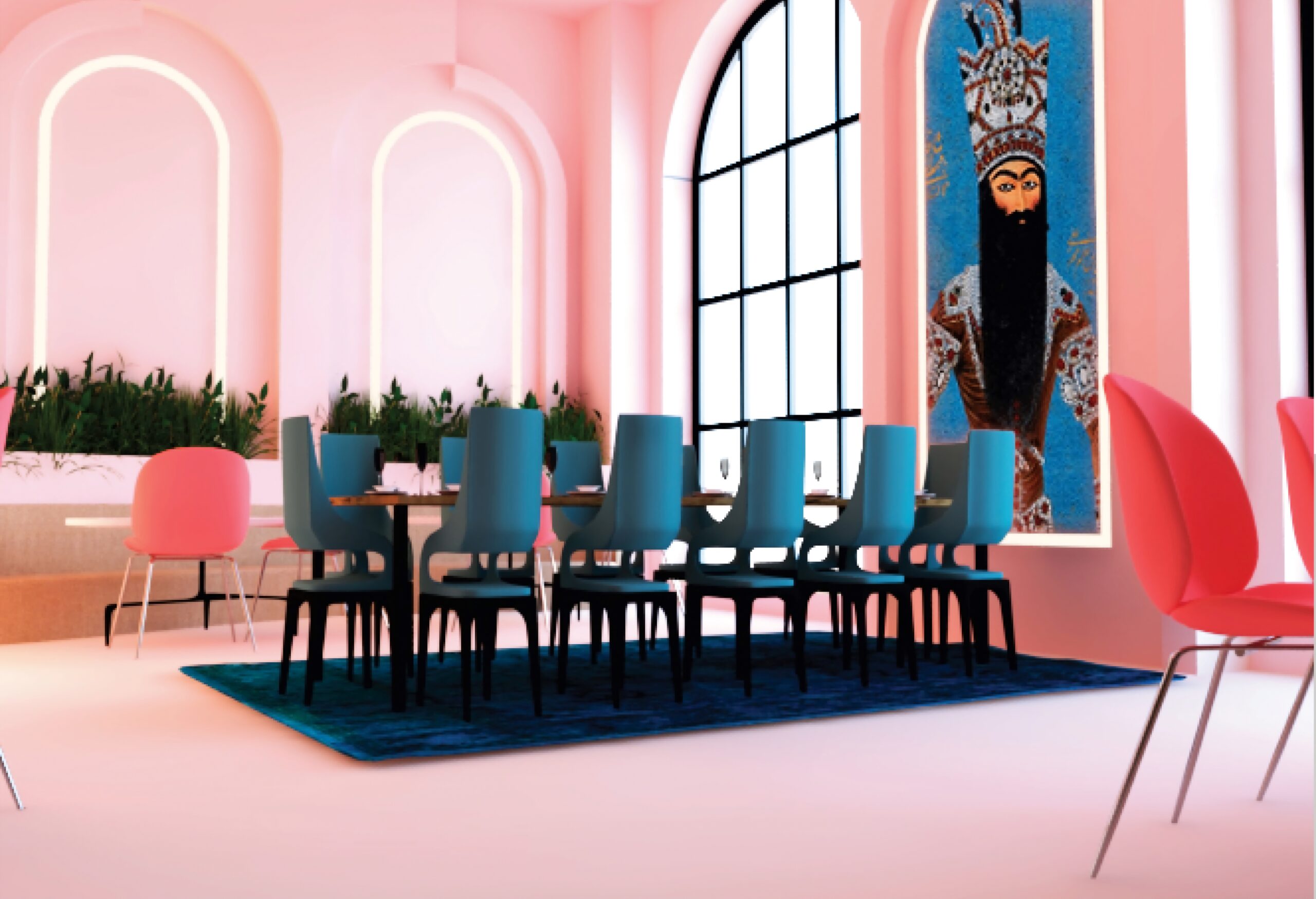
The reason for choosing this design for this project was the location and time of Café Pars, which made me start my research about the time of its construction. This place was built in the Qajar dynasty. At that time, special colors, elements, plastering, and murals of portraits of kings were used in the architecture of palaces, and I tried to combine the past and the future in this design and give a different feeling to the audience.
What does it mean to you, to become the Emerging Interior Designer of the Year?
There is an indescribable feeling that at the beginning of my career, my design has been seen and won, and this situation gave me the motivation and strength to work harder than in the past and have more courage in implementing my ideas.
When will you graduate from Pars University of Art and Architecture?
I am currently completing my dissertation and will be graduating soon.
What are you working on now? Can you share a glimpse of your design project?
I am currently working with a design team on the interior design of a clinic and pharmacy center in a shopping center on Kish Island. We tried to do a different design using a parametric design.
Last, what should we wish you for 2022?
I would like to work on special, different, and international projects in the interior design field and also run a brand in the fashion and accessories field.
CENTRSVET is a prominent lighting product design firm focused on innovation and partnering with leading designers from around the world. Winner of the “Innovation of the Year” award, Alexander Vorontsov is sharing the collaboration he had with Lomonosov Moscow State University when designing “Infinity Air”.
How did you discover your passion for design and lighting design in particular?
We are focused on creating premium-quality lighting. We develop each model in Russia, create a prototype for the product, and test it in our in-house light laboratory. We obtained patents for the newest, elaborately executed constructive solutions that make our products stand out. CENTRSVET has been the winner of 100 of the top international expert awards in the fields of lighting design, technology, and innovation.
CENTRSVET is a thriving company dedicated to lighting product design and lighting innovation. Can you share how and when the success story started?
The company was founded in 2005. The head office and R&D center are located at TEKHNOPARK ORBITA in Moscow. Our vision and technological capabilities allow us to produce the visionary functionality of our lighting. Our mission is to make the lighting of Russian companies the world standard!
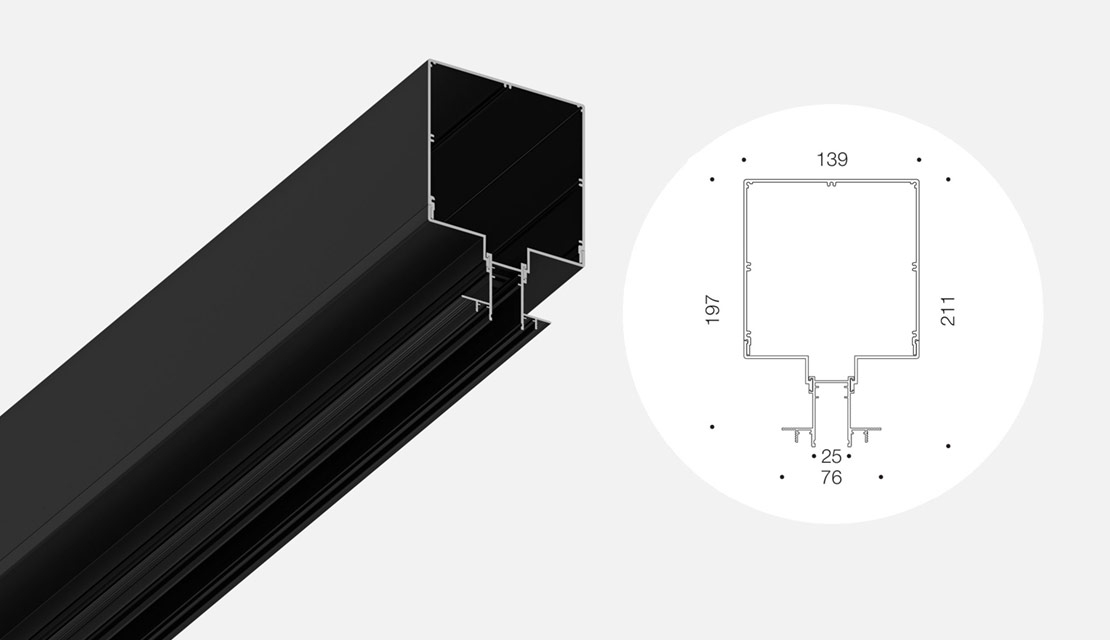
What was your creative process when working on “Infinity Air?“ What were the specifications and challenges in combining a lighting system with air distribution?
CENTRSVET and Architects of Climate, in collaboration with Lomonosov Moscow State University, tested the INFINITY AIR system. INFINITY AIR unites the CENTRSVET INFINITY lighting system with slot diffusers that provide high-quality air distribution parallel to the ceiling surface. The system is a thin line. It can be placed either on the ceiling or the wall.
The Institute of Mechanics created a laboratory to test INFINITY AIR’s noise characteristics, airflow, and airflow rate in different modes. To measure airflow, they used glycerin mixed with water and a laser. Vapor was released through a diffuser. The laser forms a beam with a lens, allowing the flow to be seen on any surface and laser plane.
According to the test results, the airstream goes along the ceiling, and its direction can be changed with blinds inside the diffuser. With this kind of air distribution, the space is conditioned, and no one is disturbed or feels uncomfortable. INFINITY AIR is suitable for both residential and office environments. Thanks to its low-noise characteristics, it can be installed in bedrooms.
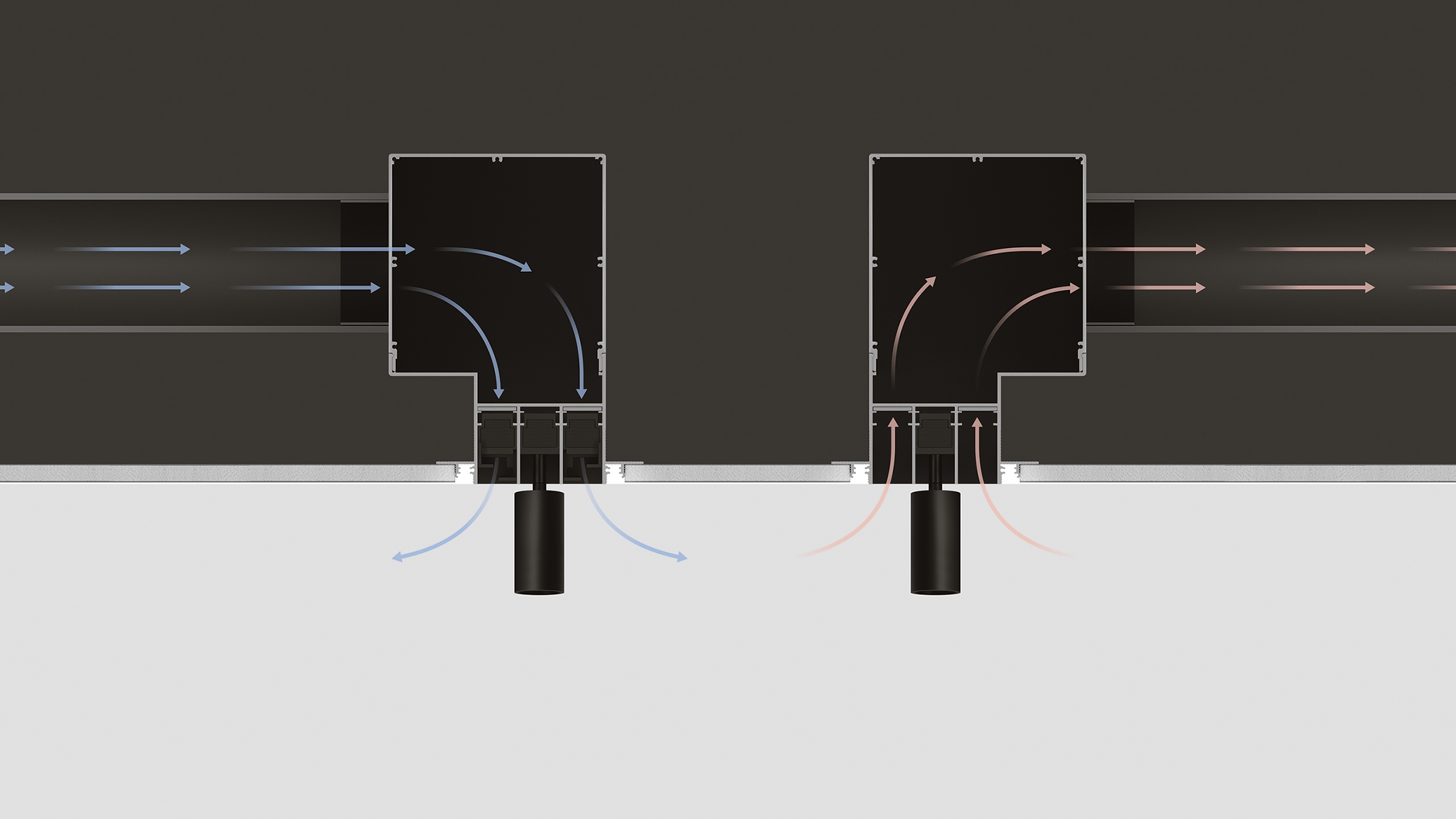
What does winning the SIT Award for “Innovation of the Year” mean to you?
For us, it means recognition and appreciation of our work, and we are happy to be among the winners of such a prestigious award! Design should improve people’s lives, so the world needs awards like the SIT Award to highlight pioneering products and innovations!
Last, what would be your best advice to young designers?
We believe that LIGHT and LOVE ARE EVERYTHING…
The 2022 SIT Furniture Design Award is now accepting entries into its two major categories, Furniture Design and Interior Design. It welcomes submissions from professional, emerging designers and students until the 28th of February 2023, the program promises to attract entries from some of the most forward creative furniture firms, manufacturers, distributors, and independent designers from all around the world!
The SIT Furniture Design Award ™ was created as a way to celebrate and share the remarkable work of furniture designers and those who use furniture in their projects. Creativity, innovative vision, and accessibility in the furniture design community deserve to be applauded and shared widely, across the world.
Looking at challenges and seeking ways to overcome them are central to furniture design. For this reason, the SIT Furniture Design Award has created an Innovation Center, the winner of which will receive a cash prize of CHF 3’000 to create a prototype or to start production. Each year, a different topic will be chosen, focusing on projects which highlight invention, closely examine today’s challenges, and find ways to overcome them.
In 2021, the awards received over 350 submissions from 47 countries, the range of work was as astounding as always, with honorees Jader Almeida, receiving the “Furniture Design of the year” grand title for “May’, Studio GAIA with the design of “W Washington D.C. Hotel”, RotoBed® designed by Hans Sandgren Jakobsen; based in England Knightsbridge Furniture Productions was awarded for the “Tron Furniture Range”, the program also recognized Messana O’Rorke with the “Junegrass House”and Karim Rashid for the “Keen Sun Chaise”. … just to name a few.
The 2022 jury, composed of 21 experienced designers and decorators’ experts, academics and media representatives will select the winners in each category in February 2023. Jurors include Juan Mellen, president of the Design Institute of Spain, Radhika Seth, Vice President of Sales for the well-known media Yanko Design, Stella Hernandez, Assistant Professor, Environmental Design Department at the ArtCenter College of Design in California and Fabio Colturri, Professor at the Istituto Marangoni Milano Design.
The “Furniture Design of the year” and “Interior Design of the Year” professionals and students will receive the coveted SIT Design Award Trophy; their winning projects will be showcased to the global audience and be featured in the Annual SIT Award catalog. Winning the SIT Design Awards is an opportunity to step into the global spotlight, elevate the company profile or boost a starting career.
Registration for the SIT Design Award is now open and will close on February 28th, 2023. Those who register before July 15th; will receive an early bird discount of 15%.
Zurich, Switzerland – The 3C Awards Group is pleased to formally announce the winners of the 2nd Edition of the SIT Design Award.
The SIT Furniture Design Award was created to recognize the efforts of talented international furniture designers, interior designers, and decorators who use furniture in the design of their spaces. The SIT Award celebrates creativity and shares with the world the innovative visions of furniture and interior designers.
The jury panel composed of 24 talented and experienced professionals, industrial designers, interior designers, academics, and media representatives, have selected the winners from over 350 submissions from 47 countries.
The judges evaluated each project based on their own merit; rewarding the most pioneering and groundbreaking designs and selecting those which stand out, based on aesthetics, functionality and innovation.
“At the SIT Design Award, we strive to support and promote not only inspired projects and innovation by professional designers but also fresh and stimulating work by emerging designers and students. This program will continue to define the future of excellence in the Furniture Design industry,” said Astrid Hebert, program director.
The range of work was as astounding as always, with honorees in Furniture Design including Tutti Bambini for the “CoZee XL” designed by Michael Samuel, Maytoni Gmbh for “Amulet” a decorative accent lamp, Vinci Design Studio with the “Mau” chair, Karim Rashid for the “Keen Sun Chaise” and Kitchoo SA showcasing “Kitchoo K9” a smart tiny kitchen. In terms of Interior Design, the program awarded Messana O’Rorke with the “Junegrass House”, Bolshakova Interiors winning in the apartment interior category with the “Renaissance Residence”, Studio GAIA with the design of “W Washington D.C. Hotel” and Weyell Berner Architekten for the “Green Marmot Kapselhotel Zurich” … just to name a few.
A full list of SIT Furniture Design Award winners can be viewed here.